Discovering the shutter and an ode to Kahlil
If you're any lucky you will have that friend that, despite not properly talking to them in many months, will have no issues at all reconnecting with you. Not just that, but will somehow be going through the same things you are going through in an almost eerily fashion. For me, this is Kahlil. If I were living a "free spirit" phase, so was Kahlil. If I was headed to marriage way too young, so was Kahlil. If I was leaving our home town for a complete different part of the world, so was Kahlil. If found myself in love, God damn it, so did Kahlil.
There are many things I could say I admire in him but his resiliency definitely stands out. In fact, he came to France to finish his engineering degree in the summer of 2023. I called him a couple times that summer and he would tell me how good being there was. That year I also came to London for the first time to do an internship at Imperial College and, along with another high school mate, decided to meet in France to visit Kahlil. The first two days it was just me and Kahlil, so he kindly offered to share his "apartment" with me during that couple days. I can't forget the first time I entered his ""apartment"" (notice how the number of quotes grow each time). It was the most inhumane habitation I have ever seen: 9 square meters INCLUDING the loo. The loo, in fact, was made of this weird plasticky material and had no separation between the shower and the rest of the toilet. This meant that if you were to take a shower and then use anything else, your feet would be submerged in water. To make matters worse, the sadists that called themselves the landlords of that godforsaken """apartment""" would turn off heating between 8 PM and 6 AM - which is precisely when you need it.
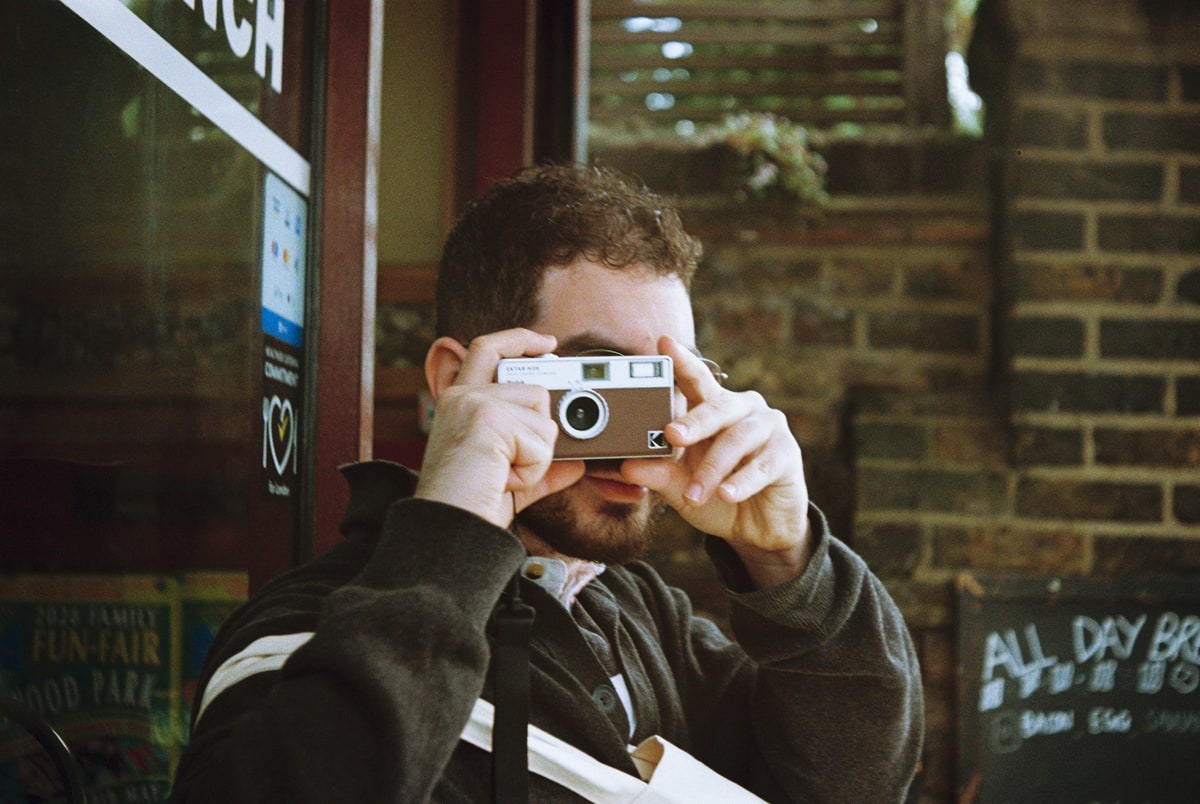
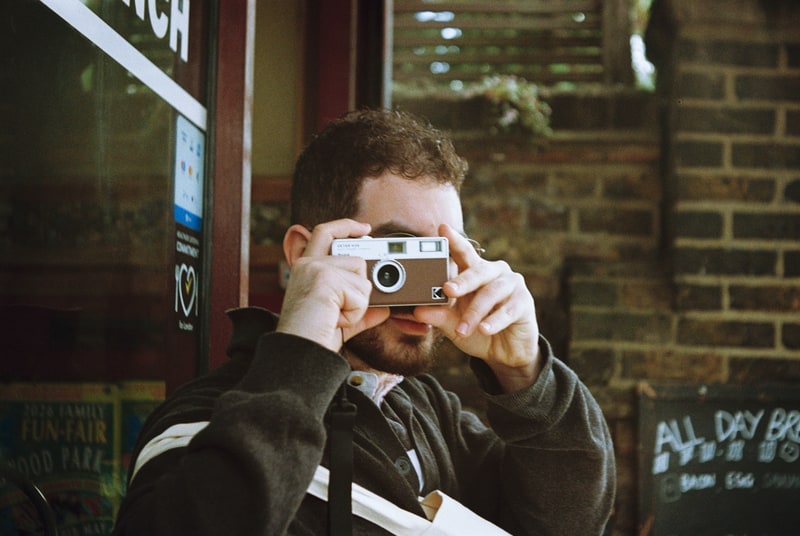
Anyway, remember I called him a couple of times in the summer? He never said a word about any of this. He indeed was extremely at peace with that glorified airplane toilet he called a home. When asked confronted about this he would just shrug and repeat "e o caba vai endoidar, é?". To this day I take this as one of the truest examples of resiliency I have ever had the pleasure of witnessing. By the way, this is him. And it's maybe the best photograph I took until that moment.
The need for some control
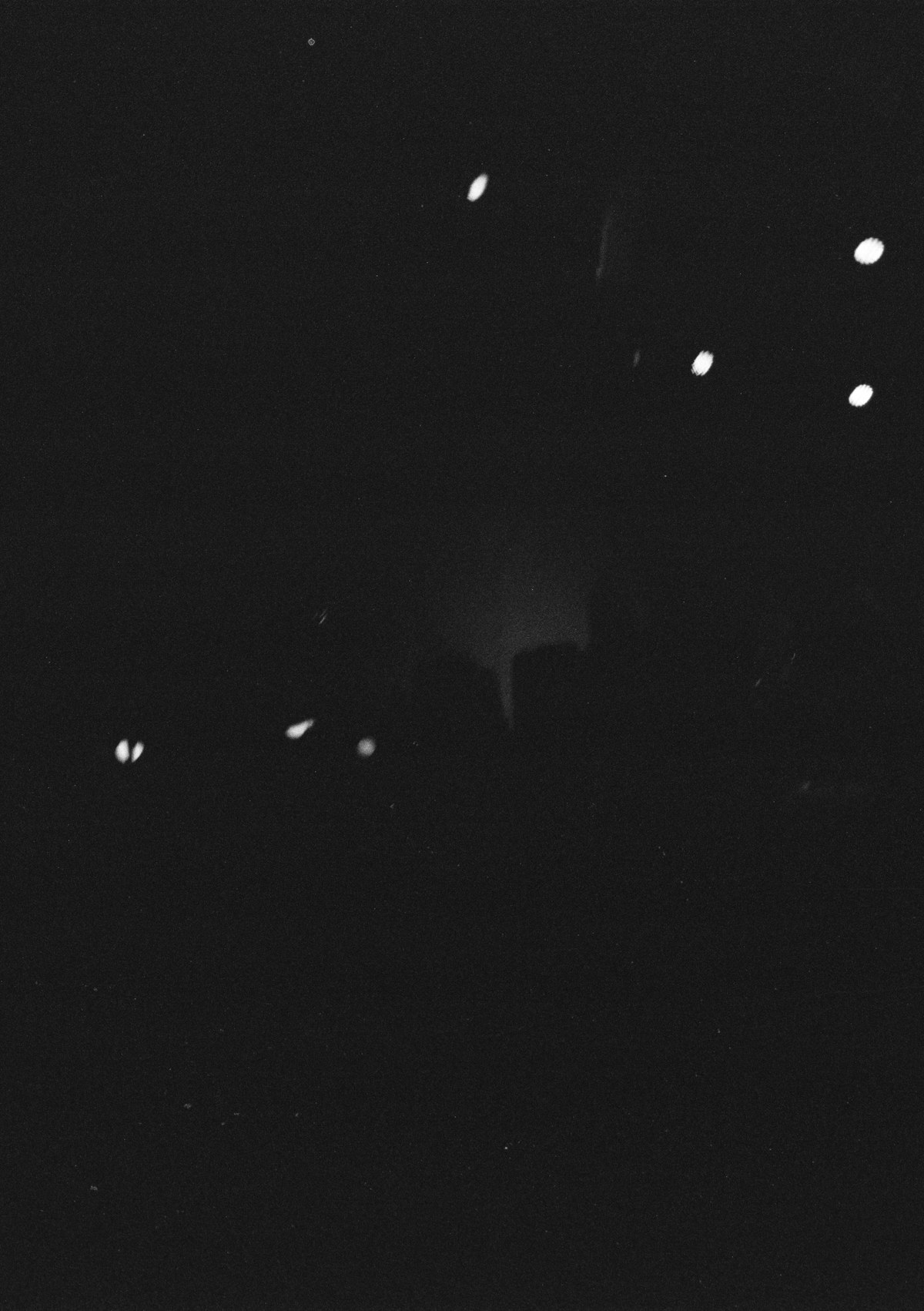
Up until this point I had only used the Ektar H35, a point and shoot camera that has no controls at all (if you don't count the flash). In fact, you can see Kahlil holding it on the photo above. As much as I enjoyed that camera, I was finding myself more and more curious on how it worked in the first place. Why do I have to take pictures of subjects 3 feet ahead of me? How did it know when there is too much or too little light? Did it even know?
I quickly learned that it, in fact, it did not know. It is fitted for what Kodak believed to be the "average" light conditions and subject distance for its users. I learned this the hard way when shooting my AGFA APX 100 film with it on an indoors blues jam, as you can see.
Online I went to do some learning. I read up on the concept of exposure, aperture, shutter speeds and what a film ISO actually entailed. All of that, of course, did not made me confident at all - I needed something to gain experience. And so I found out about this 1956 German camera that had a niche cult following: the Voigtländer Vito B. It has a beautiful frame made out of alloy, making it feel extremely solid. The mechanism works like butter, advancing film on it is one of the most satisfying things I've ever done. A Zeiss-manufactured Color-Skopar 50mm/f1.8 lens is commonly found on them and have a following themselves - it is supposed to produce crisp images if used correctly.
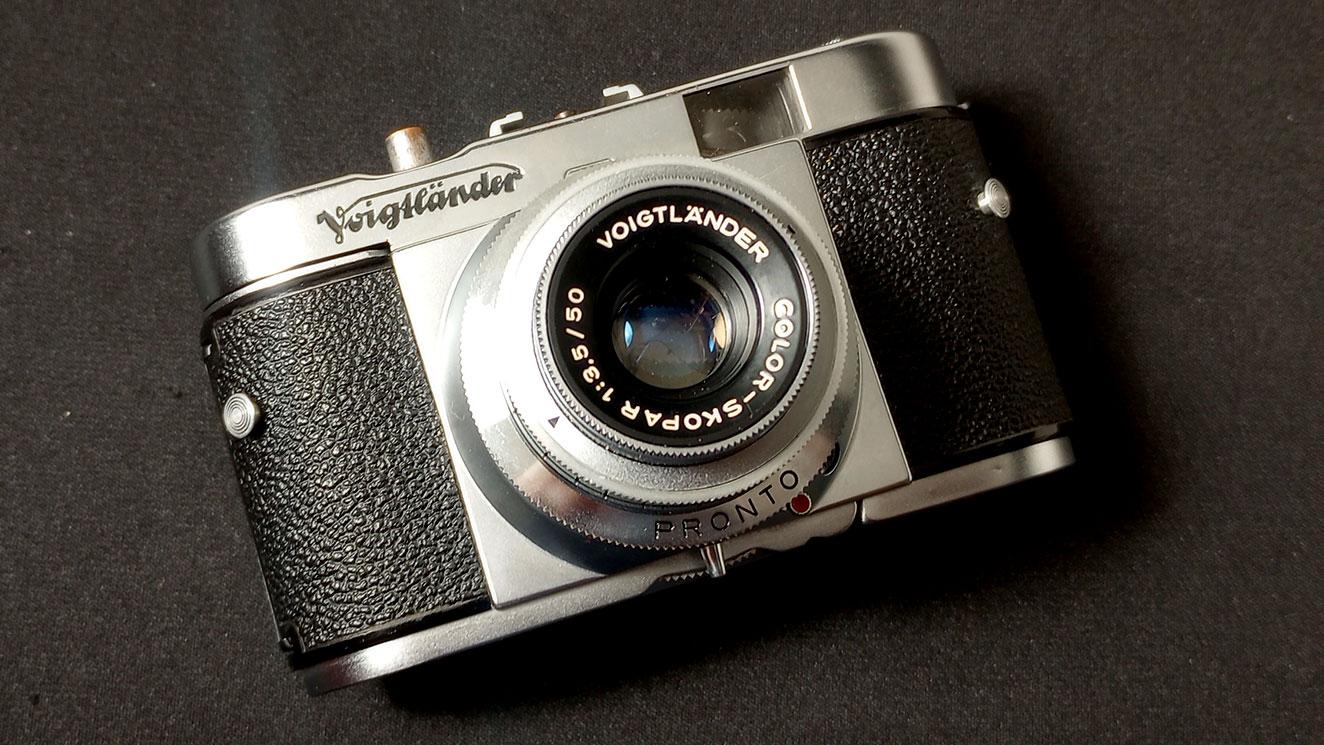
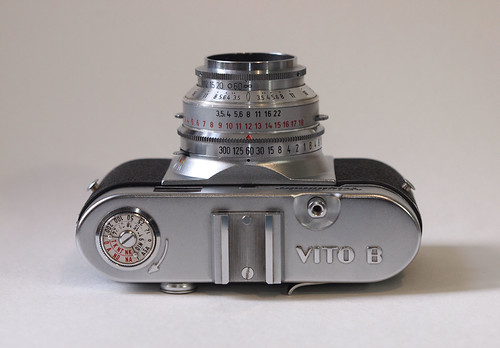
With Kahlil scheduled to spend a few days with me in London, I snagged one off of eBay for less than £40 and awaited for him to arrive.
The great humbling
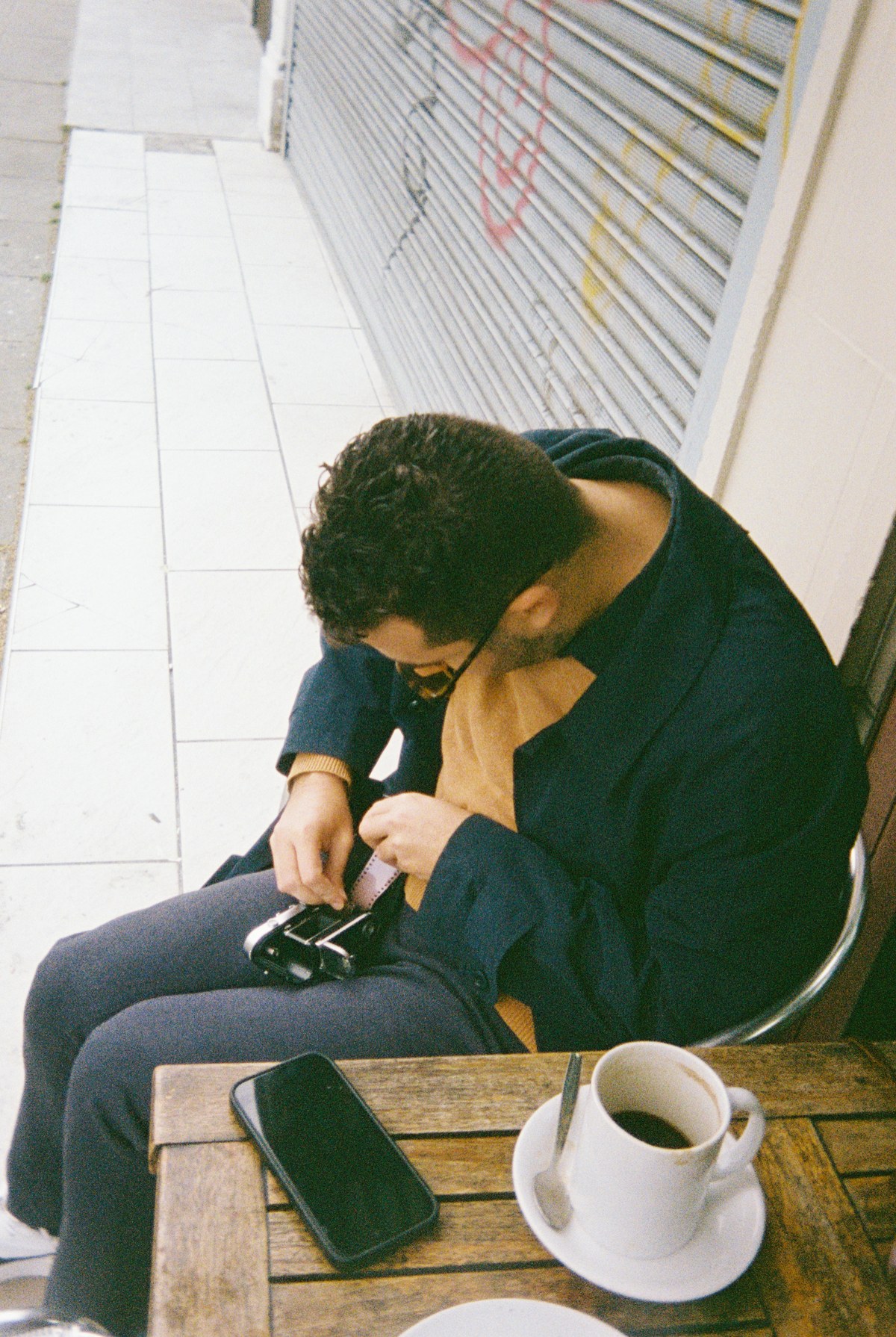
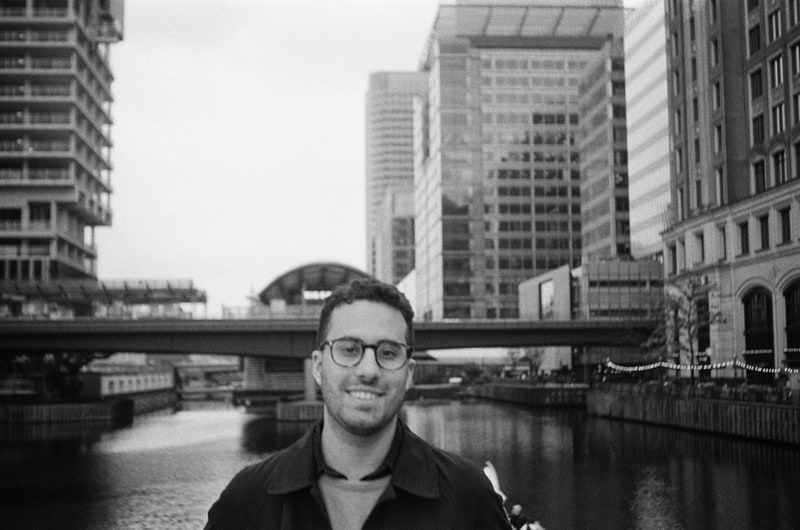
I've nurtured a love and hate relationship with the Vito B. It feels so good to hold in your hand and shoot with because everything was made with such high quality materials that it still feels premium almost 70 years later. However, I can't seem to get loading film right. In fact, I love this shot Kahlil took of me yanking burned film out of it. After much battling, I finally got a Kodak UltraMax 400 ready to.
I'm pretty sure lovely lady that runs the cafe in the related picture, which now is a regular acquaintance of mine, noticed my struggle. She asks about that every time I come back.
But that is a por menore. Me and Kahlil walked miles and miles from Acton to Paddington, passing through places like Portobello Road, Little Venice and the Paddington Canals. Nevertheless it was impressive how light carrying the Vito B felt.
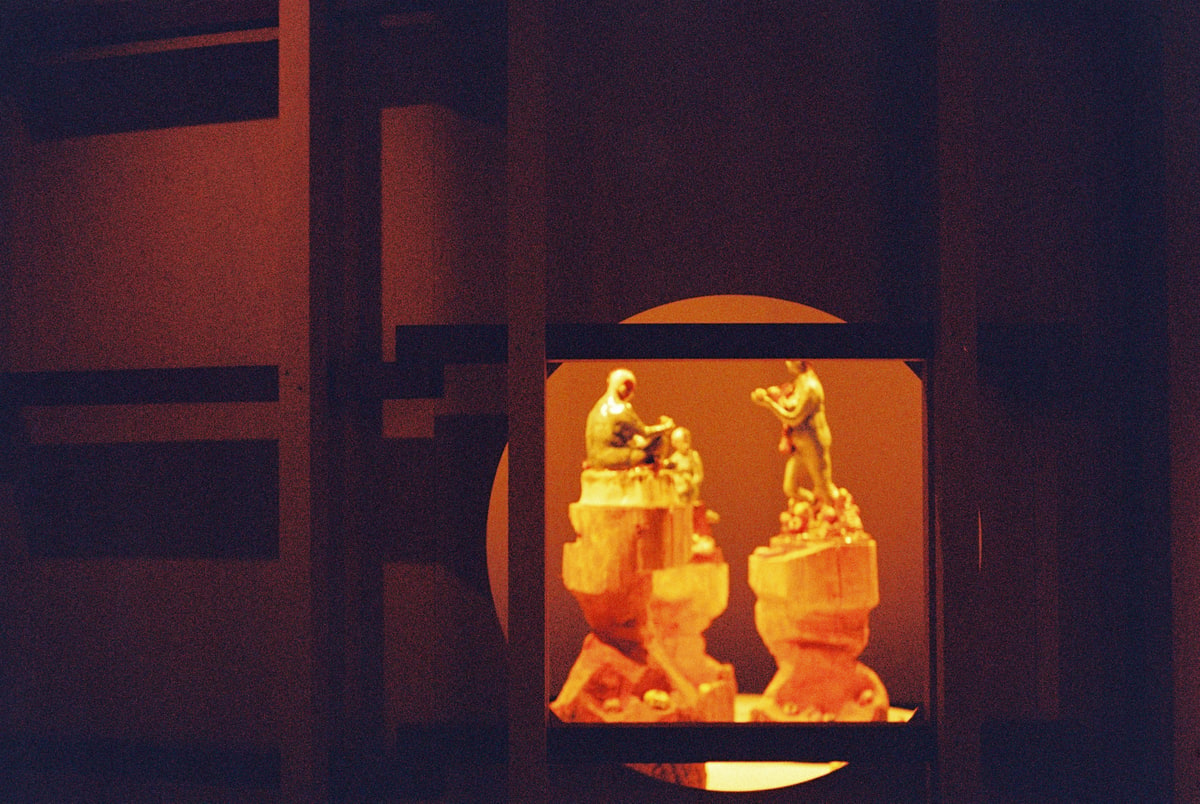
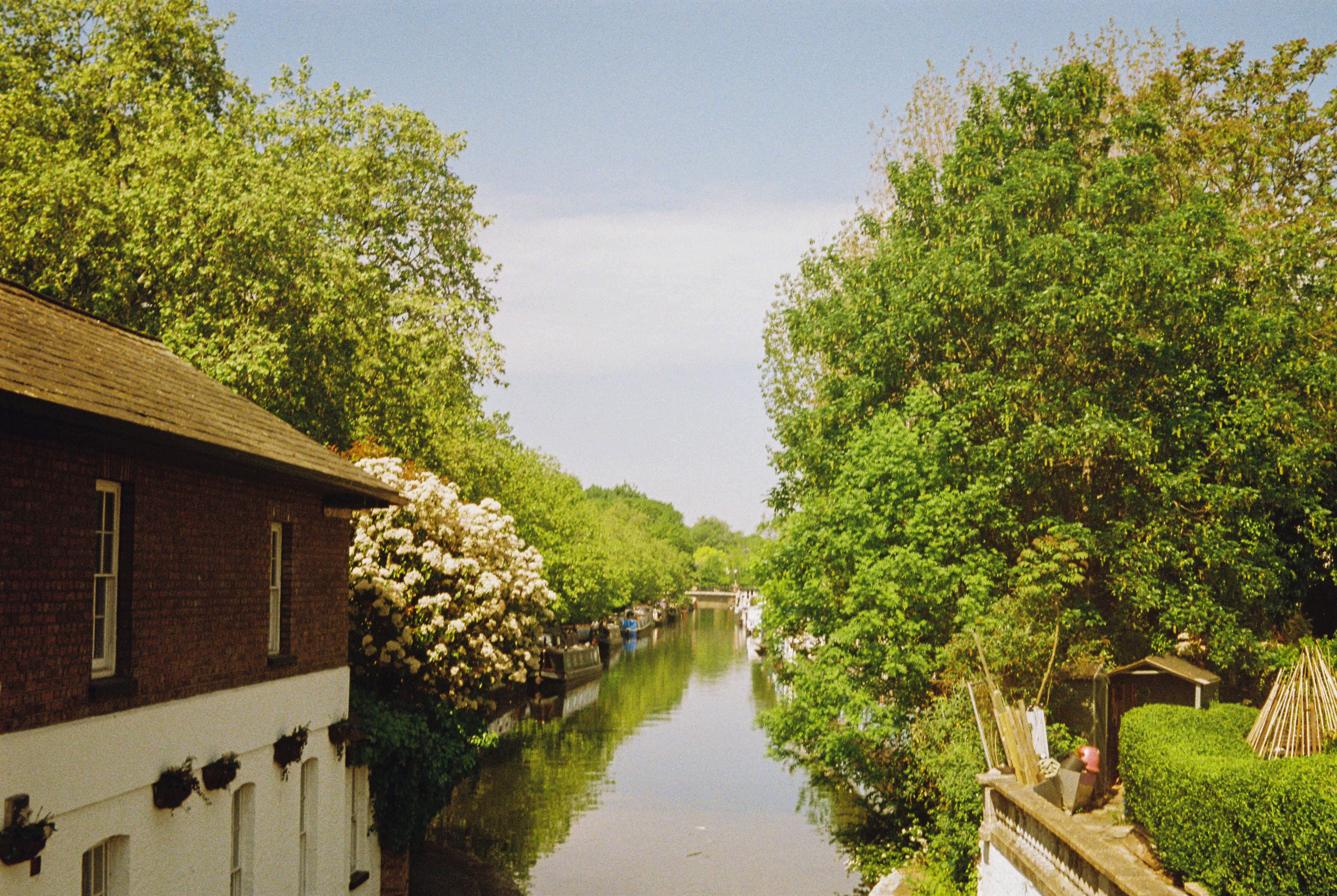
I absolutely loved the colours that the UltraMax 400 yields. This was also my first time with a camera in which I had to make decisions on aperture, shutter speed and focus. I was, of course, very unsure about what would come out of it. I grabbed a light meter app and started learning the workflow of metering light and choosing f-stops and shutter speeds for my scene. Every single exposure taught so much about the relationship between them and how different "correct" combinations would render artistically different images.
I am particularly proud of the image on the left. This was taken in the Wellcome Collection exposition about aging - which is amazing on its own right. Lighting was appropriately dim and I saw this little round window to a much brighter scene, where some statues were displayed. I didn't expect to take any photos inside the collection because of the lack of light, but my excitement for the composition took the best of me - wide aperture, slow shutter speed and them bam. One of my favourite shots to date. For a week I was wondering what would come out of this exposure and am I happy with the results!
I probably could have focused better and used a slightly higher shutter speed, but alas.
What extra patience buys you
My father has always lectured me uncountable times about how I have the tendency to rush things. In fact, when I was fucking up loading the Vito B for the first time, I could hear him saying all the usual lessons I've heard my whole life. And ditto, there is no shadow of doubt that he is right on this account. For my second roll, a Ilford HP5, I wanted to do things slightly differently. And so I took my time loading the film in and it worked like a charm. The Vito B is not a complicated camera to load, as I may have suggested earlier. It is just like my father and will humble you when you're rushing things that must be done with calm. I then started loving this camera much more.
Despite of this, me and Kahlil chose to visit a place that contradicts much of what was said above. A little man-made isle in London that lives and breathes rush hour and cocaine. The concrete and glass kingdom of the finance bros: Canary Wharf.
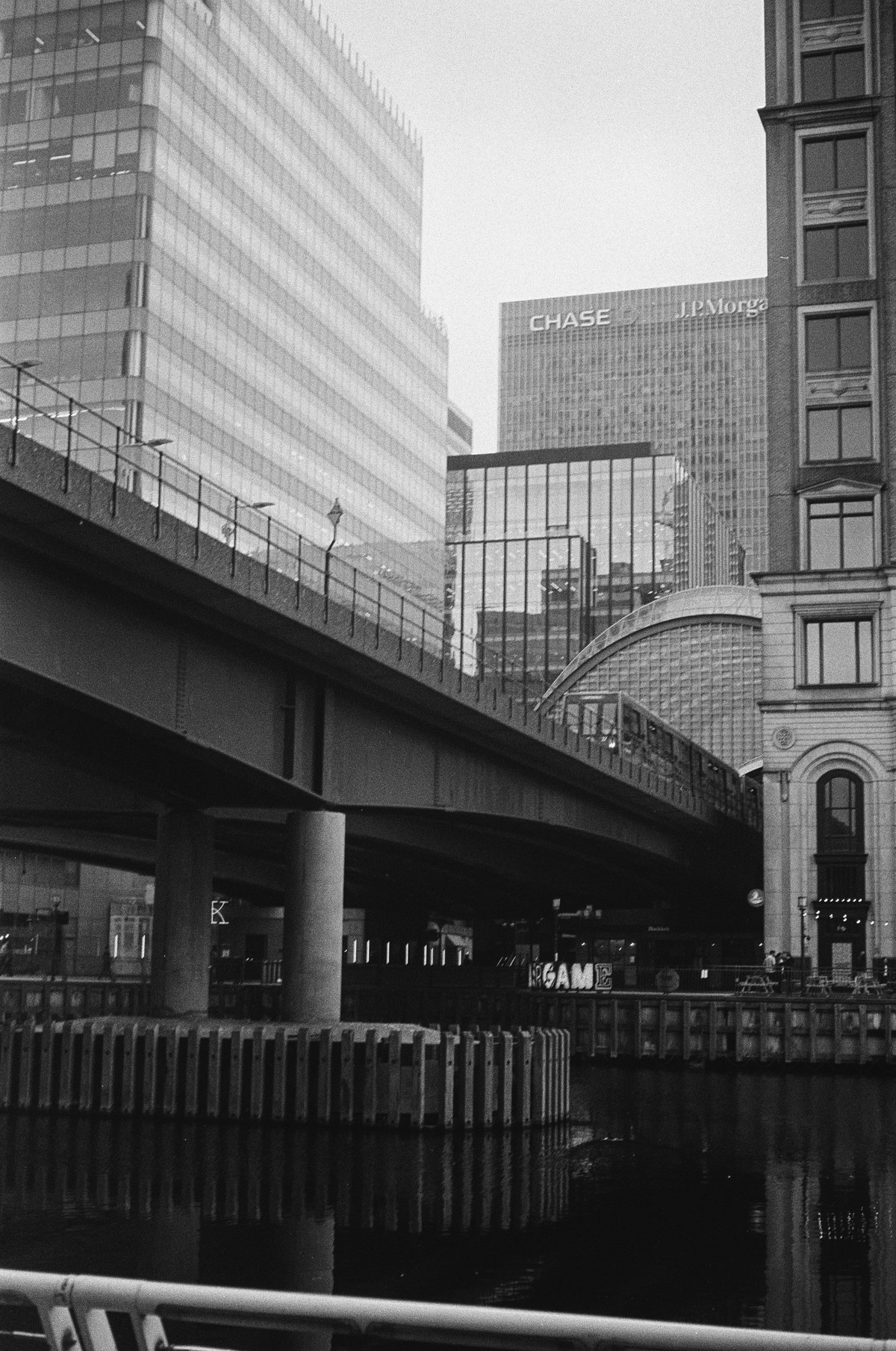
I've always fancied shooting Canary Wharf in black and white. It hasn't got much colour in the first place, so it feels like the place was designed around building beauty by layering, contrast and reflections. This is precisely what I wanted to capture in this shot. This area, being part of the London Docklands, is served by one of the coolest pictures of transportation London has to offer: the Docklands Light Railway (DLR). I waited for quite a bit of time until one came around and the patience bought me this beautiful composition.
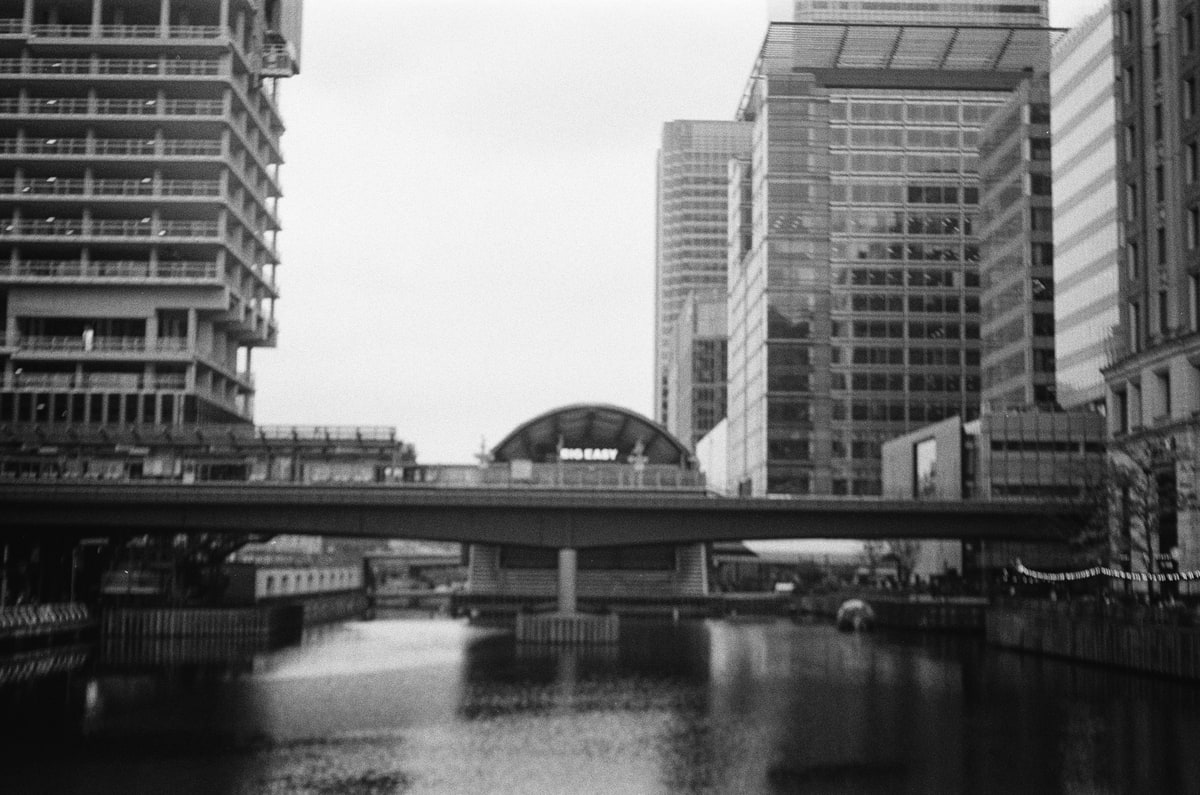
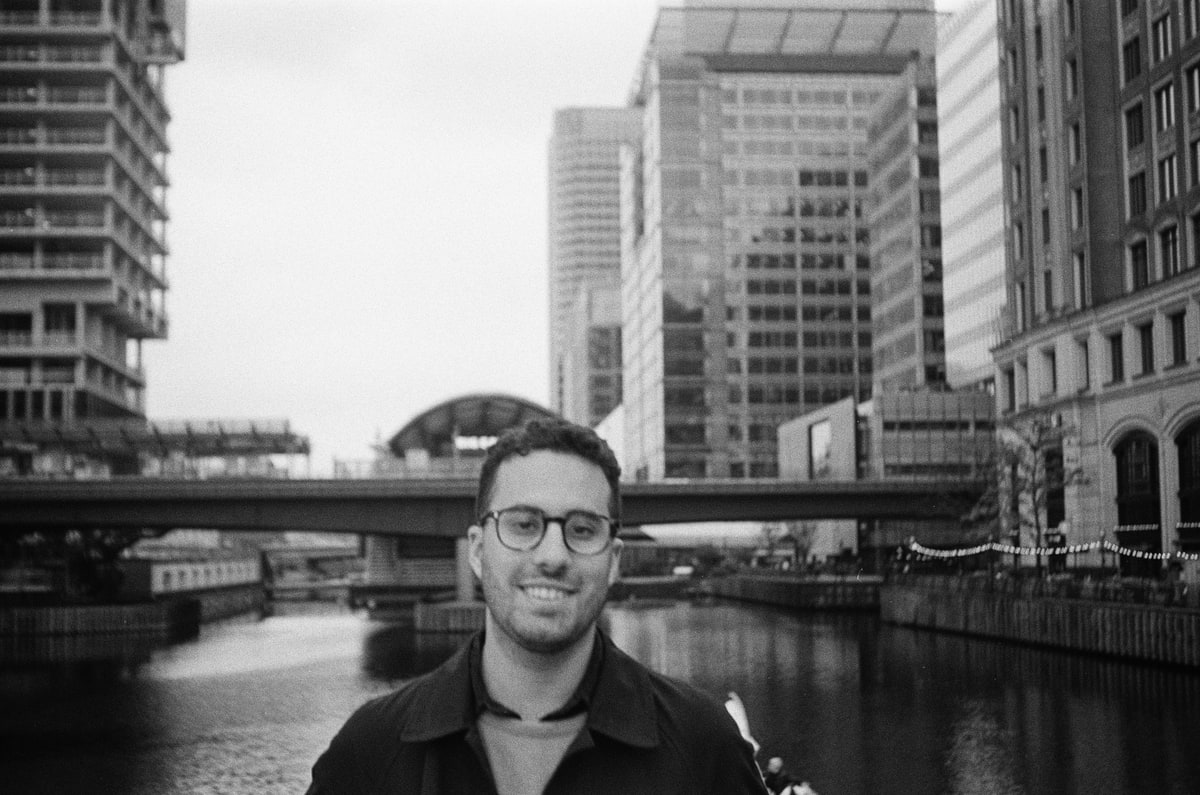
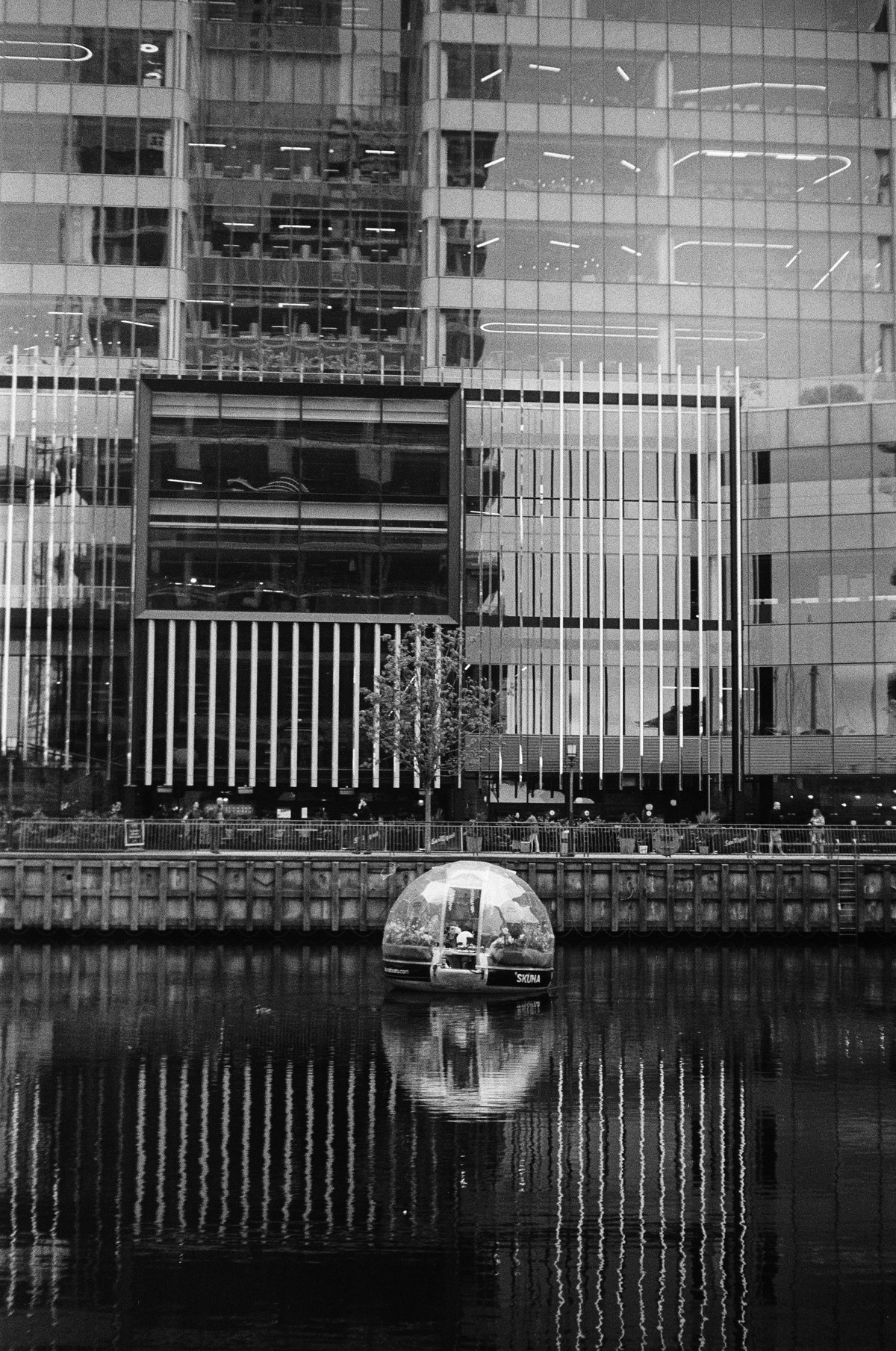
All in all, the Voigtländer Vito B has taught me much about photography and prioritising taking my time over rushing. I could have not picked a best person to share these lessons with than the man that embodies these very qualities.
The complete rolls are available below.